
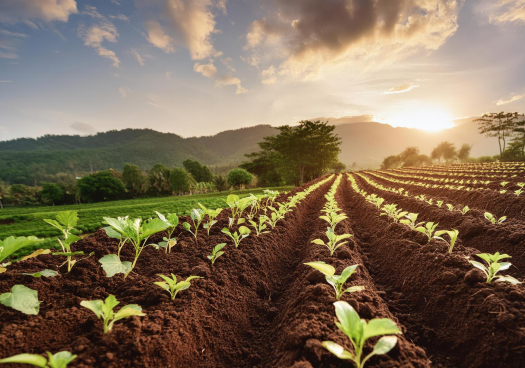
Healthy crops start below the surface. Soil testing in Australia is the foundation of every successful farming, horticultural or land management decision, from correcting pH imbalances to choosing the right fertiliser program. Whether you are managing broadacre cropping land, a vegetable operation or a re-vegetation project, understanding what is happening in your soil is the first step to improving yield, reducing input costs and protecting long term land value.
At Ultimate Agri Products, we have supported Australian growers with soil, crop and water treatment solutions since 1997. Soil testing is where that support begins.
Soil testing is the process of analysing a soil sample to determine its chemical, physical and biological properties. A standard soil test typically measures:
These results give growers a clear, data-backed picture of what the soil needs, rather than guessing or over-applying inputs.
Australia’s soils are among the oldest and most weathered in the world, and conditions vary dramatically by region. From acidic soils in parts of Victoria and NSW to sodic and saline soils common across the Mallee, Wimmera and inland cropping zones. Generic fertiliser or amendment programs often fail because they do not account for this variability.
Regular soil testing helps growers:
Most agronomists recommend soil testing annually, ideally before planting or fertiliser application. Additional testing is worthwhile in these cases.
Sample collection: Soil cores are taken from multiple points across a paddock or site at a consistent depth, usually 0 to 10cm for surface analysis, deeper for subsoil constraints.
Lab analysis: Samples are tested for pH, nutrient levels, salinity, texture and organic matter.
Results and interpretation: A report identifies deficiencies, imbalances or structural issues.
Treatment pla: Based on results, growers can select targeted products such as gypsum for sodic soils, lime or dolomite for acidic soils, or nutrient-specific fertilisers.
A soil test is only useful if it leads to action. That is where the right products make the difference. For soils with poor structure or high sodium levels, products like GYP-FLO improve soil workability and drainage. Where pH correction is needed, PH-PLUS and DOLOMITE PLUS help bring acidic soils back into an optimal range for nutrient uptake. For crops under environmental stress after soil correction, CROP BLOCK supports plant resilience and yield pack-out.
Pairing accurate soil testing with the right treatment program, rather than applying a one-size-fits-all fix, is what separates guesswork from genuine, measurable improvement.
With over 25 years of hands-on experience in Australian farming and land management, Ultimate Agri Products helps growers interpret soil test results and select the right treatment for their conditions, whether that is agricultural land, horticultural blocks, re-vegetation sites or construction land rehabilitation. Get in touch to discuss your soil testing and treatment needs.
If you want to improve crop performance and maximise farm productivity, contact Ultimate Agri today. Our agricultural experts are ready to help you choose the right Agri Crop Solutions for your farm.

Basic soil tests through agricultural labs typically range from $50 to $150 per sample, depending on the number of parameters tested (pH, nutrients, salinity, texture). Comprehensive tests covering trace elements and CEC cost more but provide a fuller picture for targeted treatment planning.
Most experts recommend testing at least once a year, ideally before planting season or major fertiliser applications, so treatment decisions are based on current soil conditions rather than outdated data.
"Soil test" usually refers to the sampling and lab process itself, while "soil analysis" refers to interpreting the results to identify deficiencies, imbalances or structural issues and recommend corrective action.
DIY pH test kits give a rough indication, but for accurate nutrient, salinity and structural data, the kind needed to plan gypsum, lime or fertiliser programs, lab-based testing through an agronomist or accredited lab is strongly recommended.
Acidic soils, sodicity (high sodium affecting structure and drainage), and low organic matter are among the most widespread issues across Australian cropping regions, particularly in Victoria, NSW and parts of South Australia.